





25 YEARS
$1.8B
10K+
Considered by many to be “one of the best mortgage brokers in Las Vegas, Nevada” for VA, FHA, conventional, and alternative income documentation home loans.
The Mortgage Is Financial. The Experience Is Personal.SEE WHAT OUR CLIENTS ARE SAYING ON GOOGLE
A loan program can look good on paper. Communication, preparation, accessibility, and follow-through determine what the borrower experiences while getting it to closing.


Using A Mortgage Broker Means Better Rates For YouLAS VEGAS MORTGAGE BROKER
WITH MULTI-STATE LICENSING
Yes. You have a friend in mortgage.
MortgageFriend, LLC is an independent Las Vegas mortgage broker serving borrowers in Nevada and multiple licensed states. Buying, refinancing, or using home equity should begin with your numbers, your goals, and a clear comparison of the loan options, costs, and underwriting paths available to you.
A bank can offer you what that bank has on the shelf. MortgageFriend is an independent mortgage broker based in Las Vegas, Nevada, led by Garrett Law — a nationally recognized VA loan originator with over two decades in the mortgage industry. We compare options across multiple lenders instead of just one, so you’re seeing real pricing, real terms, and real underwriting requirements side by side.
Our roots are in VA lending, and that’s still where we’re most at home — serving Veterans, Service Members, and military families. We also help borrowers compare FHA loans, conventional loans, refinancing, first-time homebuyer financing, debt consolidation, and alternative income documentation loans.
The interest rate is only one piece of the puzzle. Points, lender credits, mortgage insurance, down payment, loan term, closing costs, income documentation, credit, and equity all have a say in what a loan actually costs — and whether it’s the right fit for you.
Whether you’re looking for a Las Vegas mortgage broker or need help in another state where we’re licensed, we’ll help you compare the real numbers before you commit to anything.
Buying, refinancing, or tapping into your equity shouldn’t start with a sales pitch. It should start with your numbers, your goals, and a clear picture of what each option really costs.
Start with a conversation.
The Advantage Is Not More LoansCOMPARE THE RATE, COSTS & UNDERWRITING PATH.
Mortgage decisions are rarely about one number. Rate matters. So do points, lender credits, mortgage insurance, term, reserves, cash to close, appraisal requirements, underwriting overlays, and what happens to the loan over time.
Our job is to put those pieces next to each other and help you see what changes from one lending path to another.
The Right Program Depends on the BorrowerVA, FHA, CONVENTIONAL & ALTERNATIVE HOME LOANS
Know the Numbers Before You Make an OfferFIRST-TIME HOME BUYER LOANS & PRE-APPROVAL
First-time home buyers need more than a rate quote. A useful pre-approval should show purchasing power, estimated monthly payment, down payment, closing costs, property taxes, homeowners insurance, and the cash that may be needed at closing.
As a Las Vegas mortgage broker, MortgageFriend helps first-time buyers compare VA, FHA, and conventional home loan options based on eligibility, credit, income, debts, savings, and the property being purchased. Depending on the borrower and location, low down payment or down payment assistance programs may also be worth reviewing.
The goal is not to qualify for the largest possible loan. It is to understand what the home and mortgage will actually cost before making an offer.
A Credit Score Is Only Part of the Mortgage FileMORTGAGE OPTIONS FOR BORROWERS WITH CREDIT CHALLENGES
Credit challenges do not automatically rule out a mortgage. They can affect interest rates, mortgage insurance, down payment requirements, loan eligibility, and which lenders may consider the file.
We look beyond the score itself. Income, monthly debts, assets, payment history, available down payment, property type, and loan program all matter. Depending on the situation, VA, FHA, conventional, or alternative mortgage programs may provide different options.
Sometimes it makes sense to apply now. Sometimes improving a specific issue first can put the borrower in a better position. We help identify which path is realistic before unnecessary time or money is spent.
UNDERSTAND YOUR GOALS
COMPARE LOAN OPTIONS
GET PRE-APPROVED
UNDERSTAND THE COSTS
MOVE TOWARD CLOSING
The Easy Loan Usually Looks EasyEXPERIENCE MATTERS WHEN THE MORTGAGE IS NOT SIMPLE
Self-employment. Variable income. Credit events. A low-rate first mortgage you do not want to disturb. A property that does not fit neatly into a standard box. Those are the moments when mortgage experience becomes more than a résumé line.
The question is not simply whether a borrower can qualify somewhere. It is whether the file can be structured, documented, and placed intelligently enough to give the borrower a realistic path forward.
Understand. Compare. Structure. Close.HOW THE MORTGAGE PROCESS WORKS: PRE-APPROVAL TO CLOSING
Not every mortgage file is simple. Self-employment, variable income, credit events, unusual properties, high debt-to-income ratios, or a complicated refinance can change which lender or loan program makes sense.
Before underwriting, we review the loan structure, documentation, and issues that may affect the file. Better preparation gives the lender a clearer picture of the borrower and the transaction.
After application, the Loan Estimate and required disclosures show projected loan terms, payment information, and closing costs. Processing verifies the documentation. Underwriting reviews the file against lender and program requirements. If conditions are issued, we help borrowers understand what is needed and why.
From pre-approval through closing, a Las Vegas mortgage broker should help you understand where the mortgage stands, what is still needed, and what happens next.
MORTGAGE PRE-APPROVAL
LOAN APPLICATION
LOAN PROCESSING
MORTGAGE UNDERWRITING
MORTGAGE CLOSING
The People Behind the Loan MatterMEET YOUR MORTGAGE FRIENDS
MortgageFriend’s licensed mortgage professionals bring experience in home purchases, refinancing, VA lending, FHA financing, conventional mortgages, and more complicated borrower scenarios. Founder and CEO Garrett Law, MLO NMLS #20750, leads a team focused on clear communication, careful loan structure, and helping borrowers understand the numbers before they commit.
Yes. You Have a Friend in Mortgage.START WITH A CONVERSATION
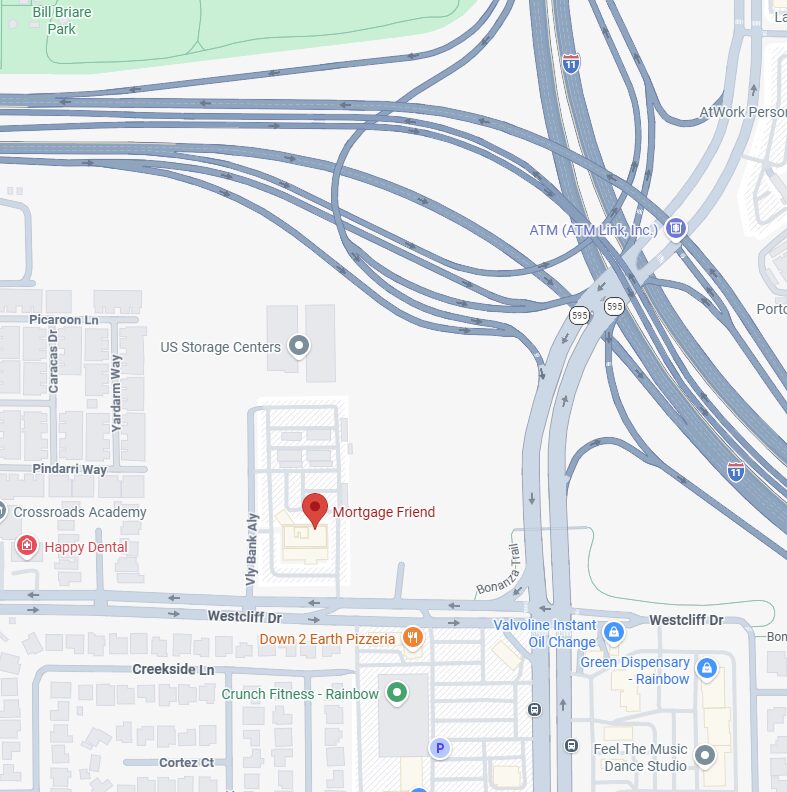
Contact Las Vegas Mortgage Broker
MortgageFriend, LLC
Pacific Time
LEARN ABOUT MORTGAGES:
GUIDES, VA LOAN NEWS & HOME FINANCING INSIGHTS


Follow us:
LINKS
Equal Housing Opportunity

Mortgage Friend, LLC supports and is in compliance with all Equal Housing Opportunity laws.
Mortgage Friend, LLC is a licensed mortgage brokerage specializing in originating residential mortgage loans.
Copyright © Mortgage Friend, LLC 2026
Copyright © 2026 VA Mortgage Friend – All Rights Reserved.
© 2026 Mortgage Friend, LLC™. All Rights Reserved. Mortgage Friend, LLC is not affiliated with any U.S. Government agency, nor do we represent any of them. Mortgage Friend, LLC Corporate Address: 6900 Westcliff Dr, Suite 801, Las Vegas, NV 89145, (877) 239-5312. VA ID 9400070000 . Click on these links to access our Privacy Policy and our Licensing Information. Consumer’s total finance charges may be higher over the life of the loan.
License look up on NMLS Consumer Access http://www.nmlsconsumeraccess.org | Alabama Mortgage Broker License No. 2790673; Arizona Mortgage Broker License No. MB-2014803; Licensed by the Department of Financial Protection and Innovation under the California Finance Lenders Act License No. 60DBO-215424; Colorado Mortgage Company Registration License NMLS ID# 2790673; Florida Mortgage Broker License No. MBR8399; Indiana SOS Brokers License NMLS # 2790673; Kentucky Mortgage Broker License No. MB940046; Maryland Mortgage Lender License NMLS # 2790673; Nevada Mortgage Company License No. NMC-162414; North Carolina Mortgage Broker License No. B-233518; Ohio Residential Mortgage Lending Act Certificate of Registration No. RM.805555.000; Oklahoma Mortgage Broker License No. MB017939; Tennessee Mortgage License NMLS ID# 2790673; Texas – SML Mortgage Company License NMLS ID# 2790673; Utah-DRE Mortgage Entity License No. 14271899; Virginia Broker License No. MC-8166.